
Sustainability Goals Driving Touchless Fixture Selection in Stadiums
Water efficiency, ESG reporting, and long-term facility performance are reshaping how architects and MEP engineers select restroom fixtures for sports and entertainment venues. Fontana touchless systems fit into this discussion through sensor-controlled operation, coordinated washstations, and specification-led design.
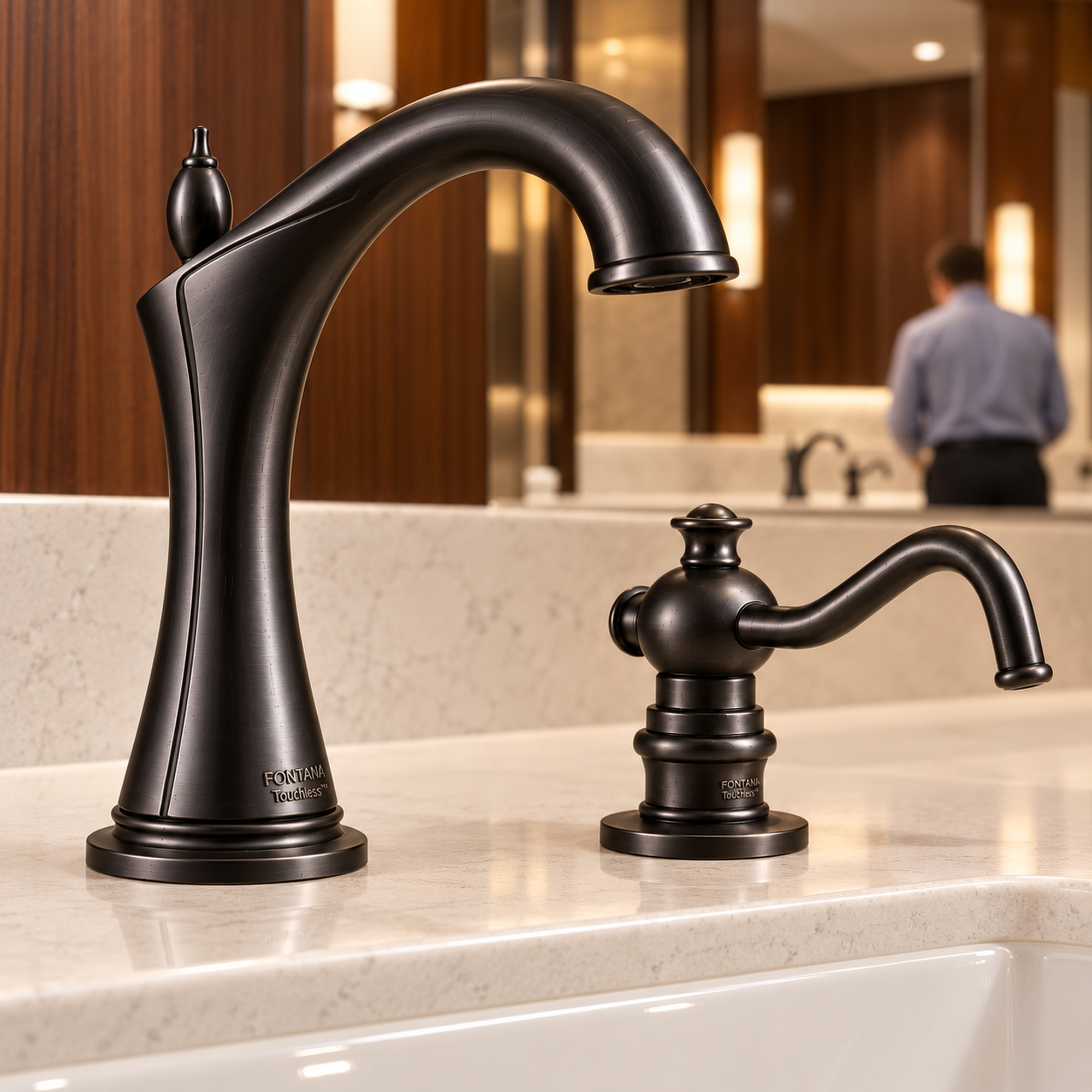
Stadium Restrooms Are Part of the Sustainability Strategy
An arena or stadium might operate quietly on non-event days and then experience thousands of restroom visits in concentrated waves. That variability makes the water performance of every faucet, flush device, and handwashing station a meaningful design consideration.
For architects, specification writers, contractors, and owners, sustainability is no longer represented only by a building’s energy plant or exterior envelope. Plumbing fixtures contribute to operational water demand, hot-water loads, utility expenses, maintenance activity, and the environmental indicators used in corporate and institutional reporting. Public restroom faucets are small components, but they repeat the same operating cycle across many stations and many events.
Touchless operation changes the relationship between the user and the water supply. Rather than depending exclusively on a visitor to close a handle, an electronic controller activates and shuts off flow according to its programmed sensing behavior. The potential reduction in unnecessary runtime is valuable, but it must be evaluated alongside the actual outlet flow, pressure conditions, sensor calibration, and building occupancy profile. A poorly commissioned automatic faucet can waste water too.
Flow rates are planning references, not specifications for every Fontana model. Confirm the selected product’s certified data and local code requirements.
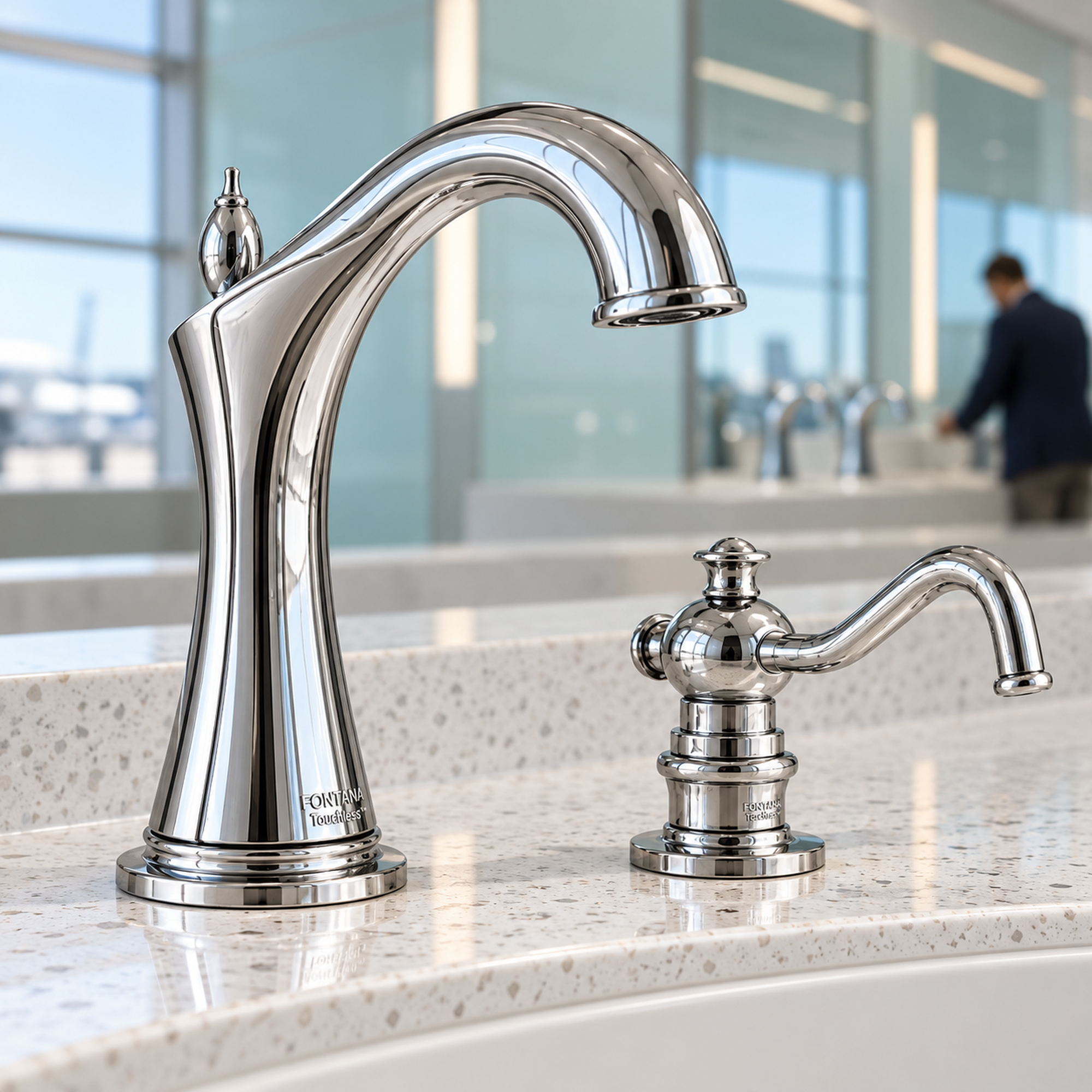
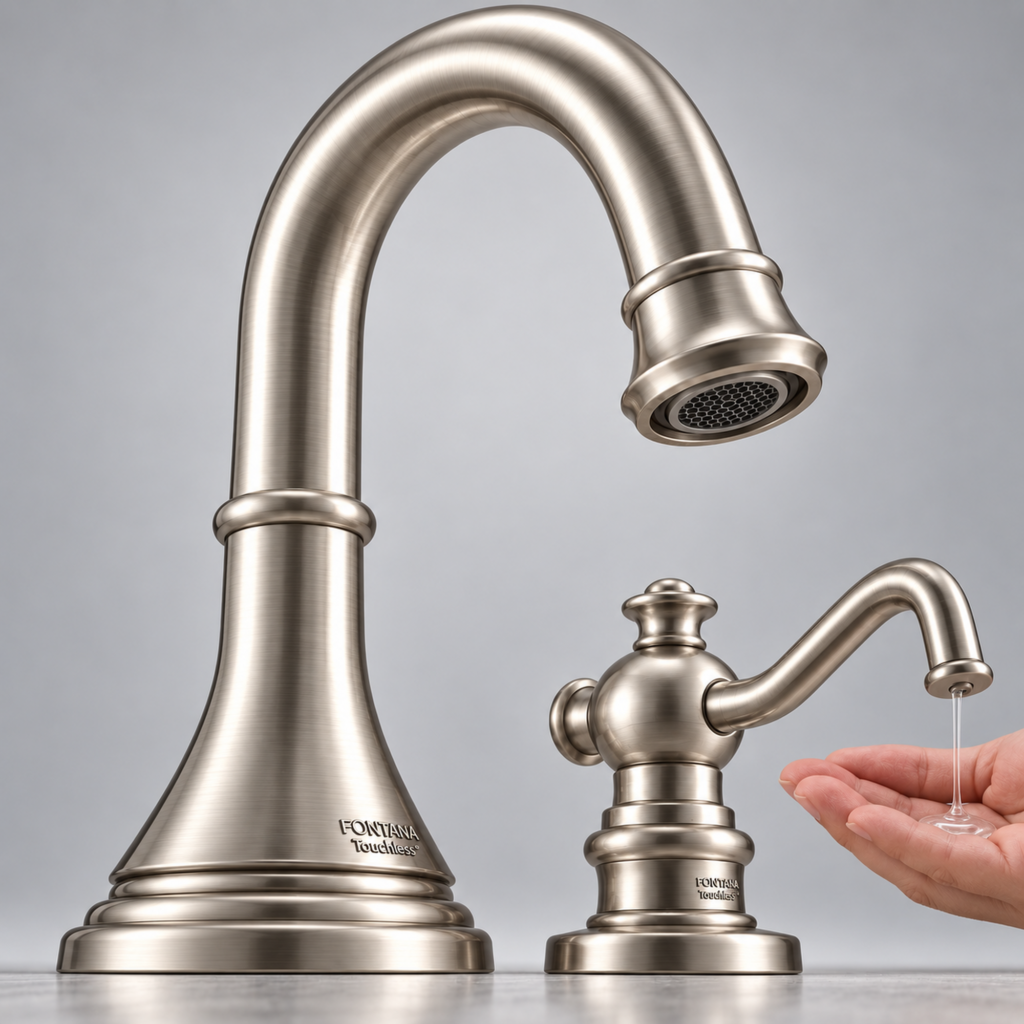
Read more: ESG, operating budgets, and measurable infrastructure performance
Environmental, social, and governance initiatives work best when a facility’s procurement goals can be translated into verifiable operating metrics. In a stadium restroom program, teams can assess gallons per visitor, modeled annual handwashing demand, water use by fixture bank, energy used for domestic hot water, fixture repair frequency, and time between service visits. These measures are more defensible than a general claim that a touchless faucet is inherently sustainable.
Owners may also prioritize resilient water supply planning, protection against prolonged discharge, and consistency across phased renovations. Using a coordinated family of commercial fixtures can simplify spare-parts planning and reduce specification variation, provided the chosen products share documented service components. Sustainability therefore becomes a combination of efficiency, operational reliability, and responsible replacement planning.
Water Conservation Starts with Verified Flow and Runtime
Water reduction requires two decisions: how quickly water leaves the faucet and how long it runs. A sensor can support on-demand shutoff, while a properly selected flow regulator controls delivered volume. Neither feature replaces commissioning or documented hydraulic performance.
For most public lavatory applications, the U.S. EPA identifies 0.5 gallons per minute or less as an efficient rate. LEED v4.1 also uses 0.5 GPM at 60 psi as the baseline for public lavatory faucets. The WaterSense labeling criteria commonly associated with 1.5-GPM private lavatory faucets should not be applied automatically to public restroom fixtures.
Stadium designers should check the actual model’s cut sheet, verify delivered flow at the specified test pressure, and confirm acceptable handwashing performance at peak plumbing demand. Where 0.35-GPM options are documented, additional modeled reductions may be possible against a 0.5-GPM public-lavatory baseline.
Learn more: how to model fixture savings without inflated claims
Use a transparent calculation: annual activations multiplied by the average duration in minutes multiplied by measured or documented flow in GPM. Compare a realistic baseline and design case under the same assumptions, and account for variations in dwell time, misactivation, intentional maintenance flushing, and user behavior. A flow-only comparison is not evidence of whole-building savings because toilets, urinals, cooling, irrigation, and process loads may dominate consumption.
LEED water-use reduction outcomes depend on the project rating system, aggregate fixture schedule, calculation assumptions, and applicable prerequisites. A model meeting a 0.5-GPM public faucet baseline does not by itself demonstrate an improvement below that baseline. Do not claim LEED certification or WaterSense labeling for a product unless the appropriate documentation establishes eligibility and compliance.
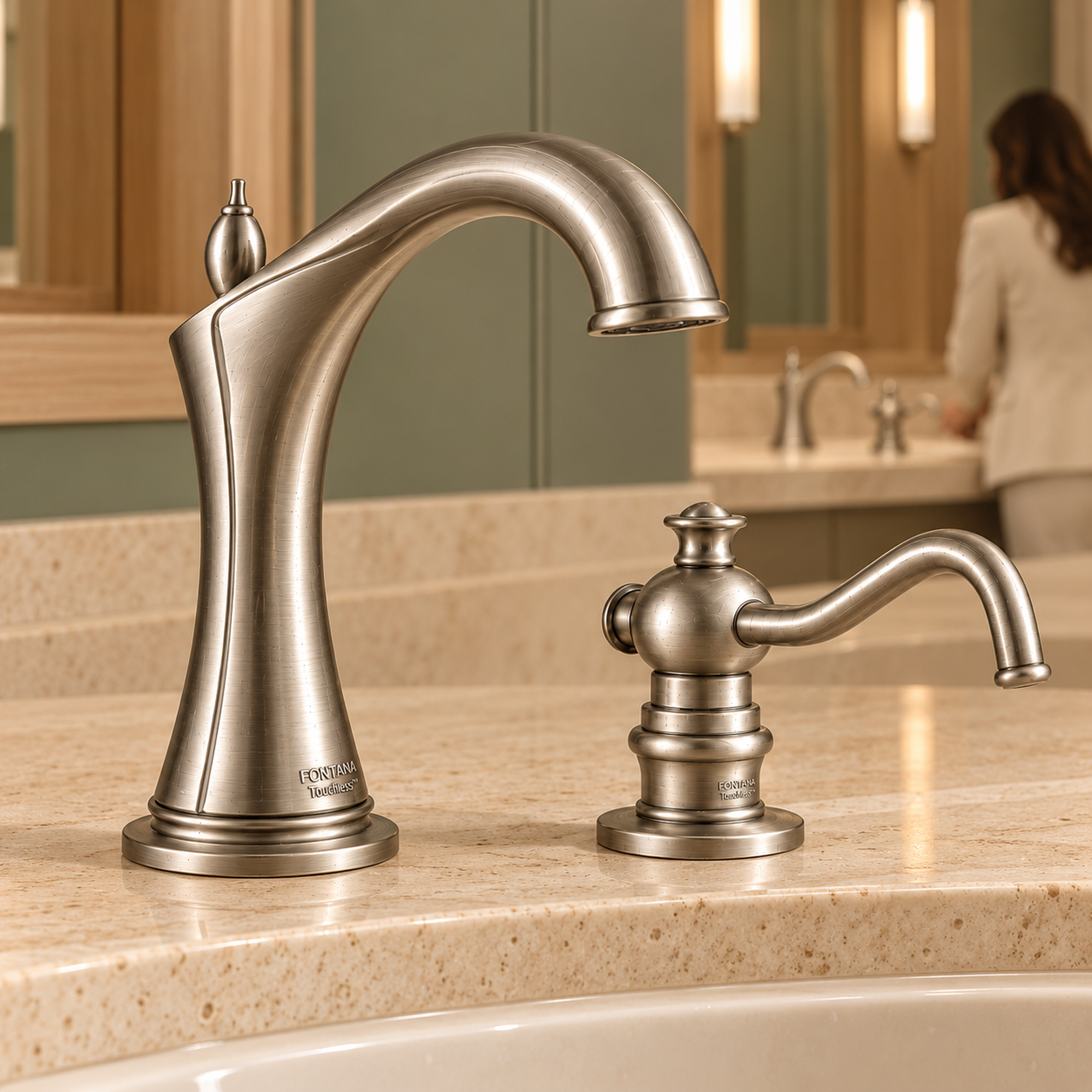
Illustrative annual faucet-water calculation
For 200,000 handwashing activations per year with 15 seconds of actual flow per activation, a 0.5-GPM faucet uses 25,000 gallons. A 0.35-GPM faucet uses 17,500 gallons, a modeled difference of 7,500 gallons (30%). These are scenario inputs, not observed stadium savings; actual results vary with activation duration, use, and commissioning.
| Design variable | Baseline case | Lower-flow scenario | What the AEC team must verify |
|---|---|---|---|
| Public-lavatory flow | 0.50 GPM | 0.35 GPM | Model documentation, pressure, code acceptance |
| Annual activations | 200,000 | 200,000 | Attendance, restroom traffic, actual behavior |
| Flow per activation | 15 seconds | 15 seconds | Sensor cutoff, repeat activations, handwashing needs |
| Modeled annual demand | 25,000 gallons | 17,500 gallons | Metering, sample testing, as-operated adjustment |
Translate Sustainability Targets into an AEC Fixture Schedule
A responsible touchless-faucet specification links the environmental intent to product data, coordination drawings, commissioning procedures, and maintenance access.
Hydraulics & temperature control
Schedule a project-appropriate flow rate and test pressure. Check inlet pressure limits, aerator or laminar outlet behavior, mixing arrangement, supply temperature, backflow provisions where required, and compatibility with ASME A112.18.1/CSA B125.1 where applicable.
View coordination details
Confirm thermal-control design separately from faucet sensing. Where an individual mixing valve is used, review relevant ASSE 1070 requirements and installation instructions. A lower outlet flow can change hot-water arrival time and perceived handwashing comfort, making mockups useful.
Sensor performance & water control
Ask for activation-zone geometry, startup and cutoff timing, maximum continuous-run protection, response to reflective basins, and procedures for commissioning adjacent stations without cross-triggering.
View commissioning details
Test detection with typical users, differing hand positions, direct sunlight or restroom lighting where relevant, and a wet reflective sink. Verify no nuisance activation when carts, cleaning equipment, or bags pass near the lavatory.
Power, service access & uptime
Coordinate battery, low-voltage, AC-adapter, or hybrid arrangements only where supported by the specific model. Locate valves, filters, power modules, and shutoffs where authorized maintenance staff can reach them.
View maintenance details
Consider service intervals, accessible filters, replacement solenoid availability, parts documentation, electrical isolation, and emergency response to a fixture that fails open or fails closed. Standardization can reduce inventory complexity but should not override performance requirements.
Accessibility & material evidence
Check the completed installation against the ADA 2010 Standards and ICC A117.1 where adopted, including approach, reach, clear floor space, and basin configuration. Request relevant potable-water-contact documentation, such as NSF/ANSI/CAN 61 and NSF/ANSI 372 where specified.
View product-evidence requirements
Do not infer ADA compliance, low-lead certification, or other approvals from appearance alone. Product listing, third-party reports, configuration-specific cut sheets, and the installed geometry must substantiate each applicable claim.
| Submittal item | Why it matters | Acceptance approach |
|---|---|---|
| Current product cut sheet | Flow, pressure, mounting, power, controls | Match the exact specified model and revision |
| Dimensional and rough-in drawing | Sink reach, splash zone, accessible use | Coordinate with architectural and plumbing plans |
| Compliance and certification evidence | Code, potable water, electrical safety | Verify each claim for the relevant configuration |
| Service documentation | Maintainability and replacement continuity | Review filters, sensors, solenoids, and availability |
| Commissioning and handover | Actual performance rather than marketing targets | Record flow, timing, sensor tests, and training |
Coordinate Faucet, Soap, and Maintenance Systems
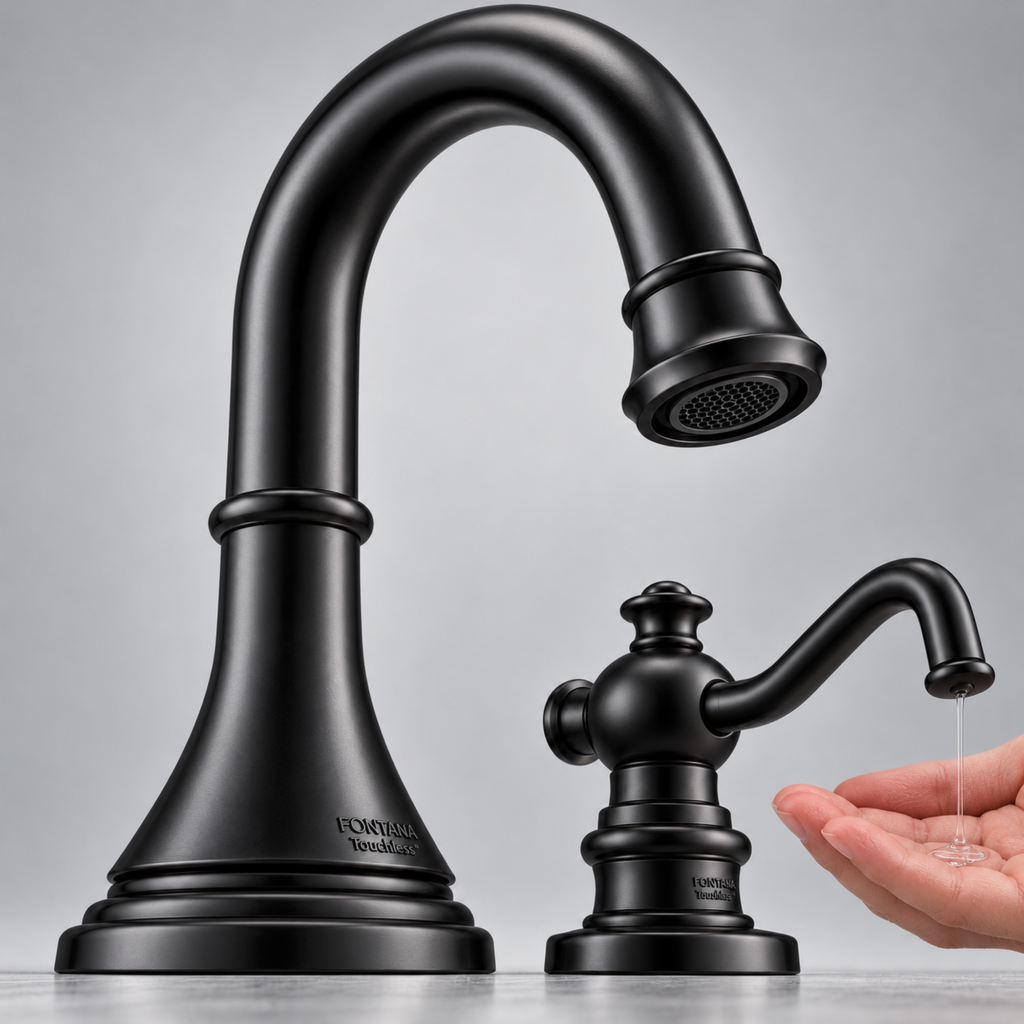
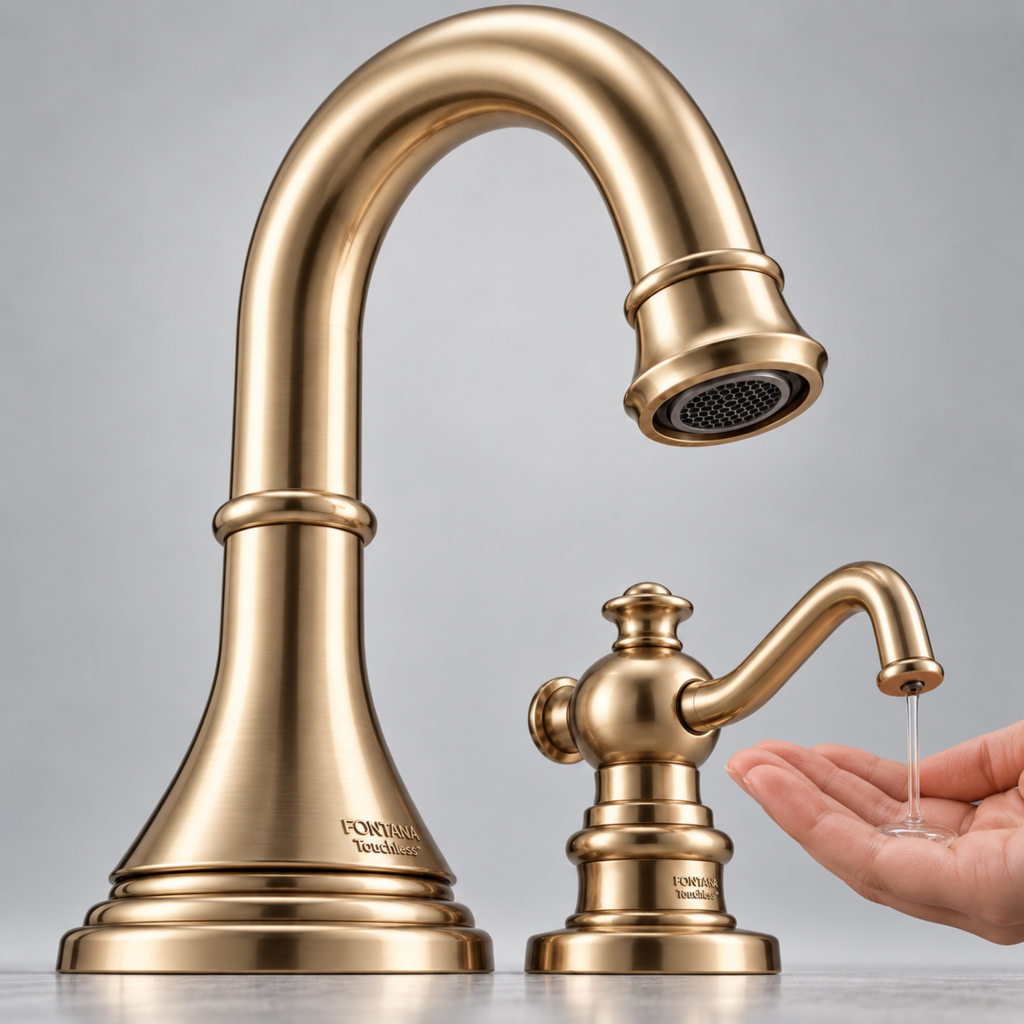
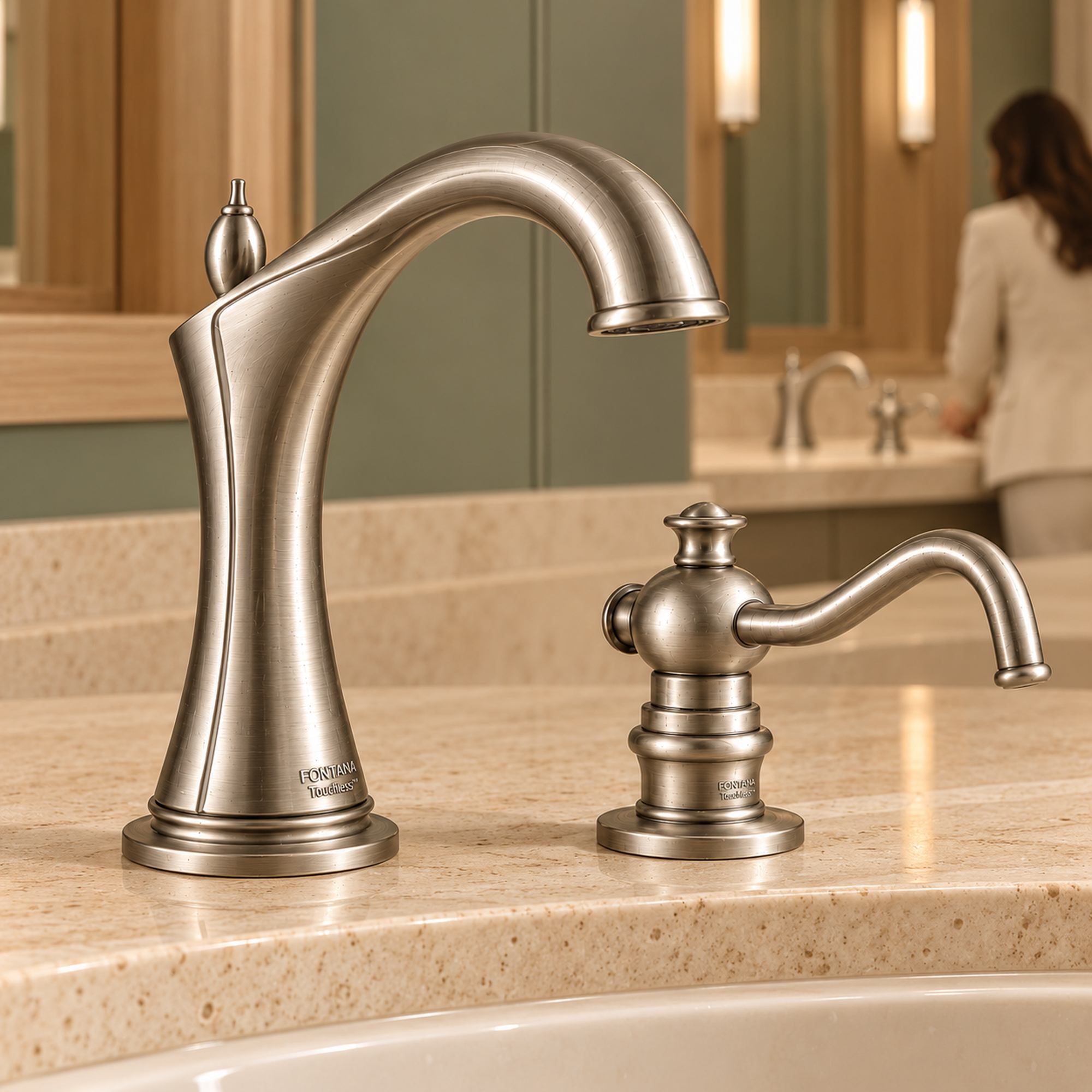
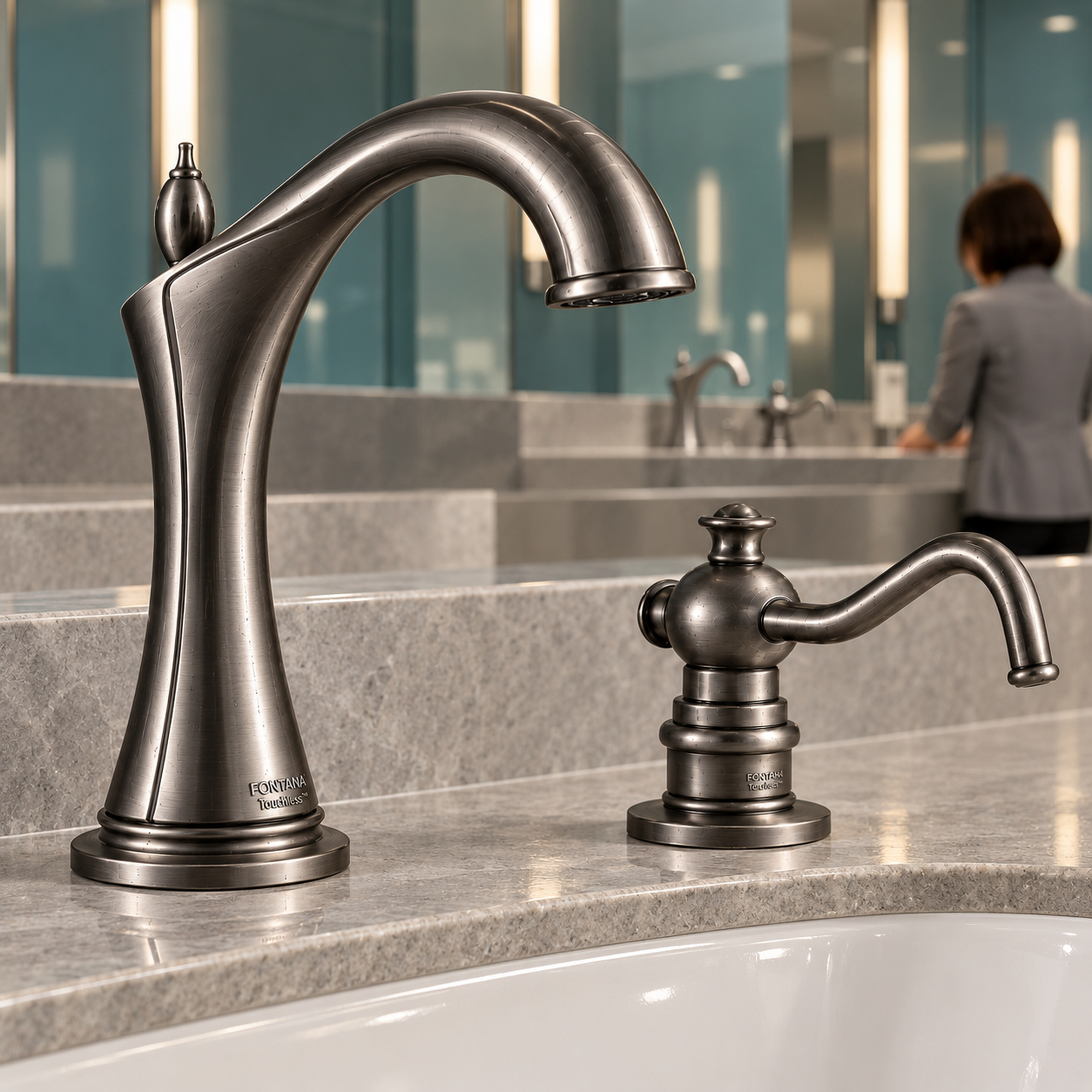
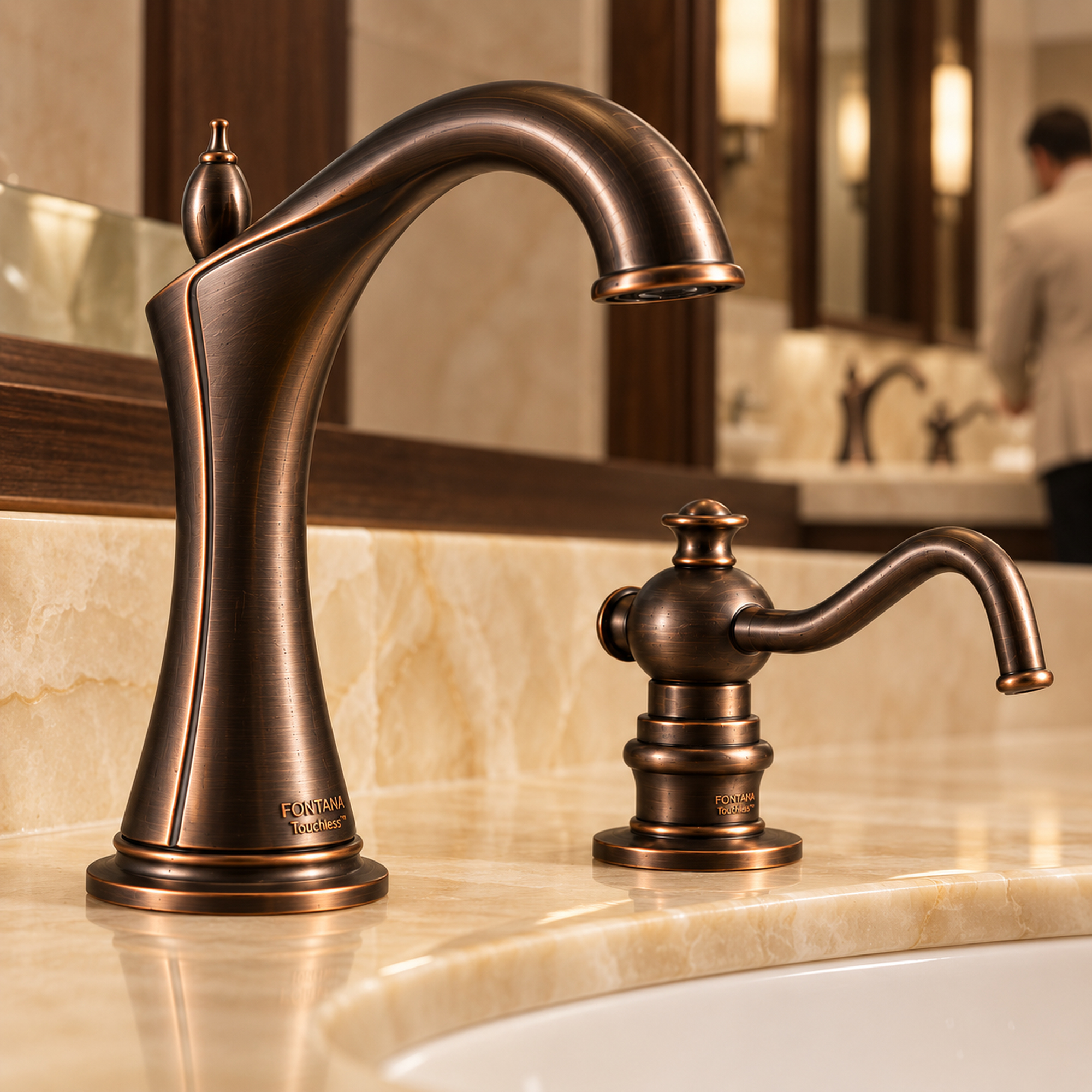
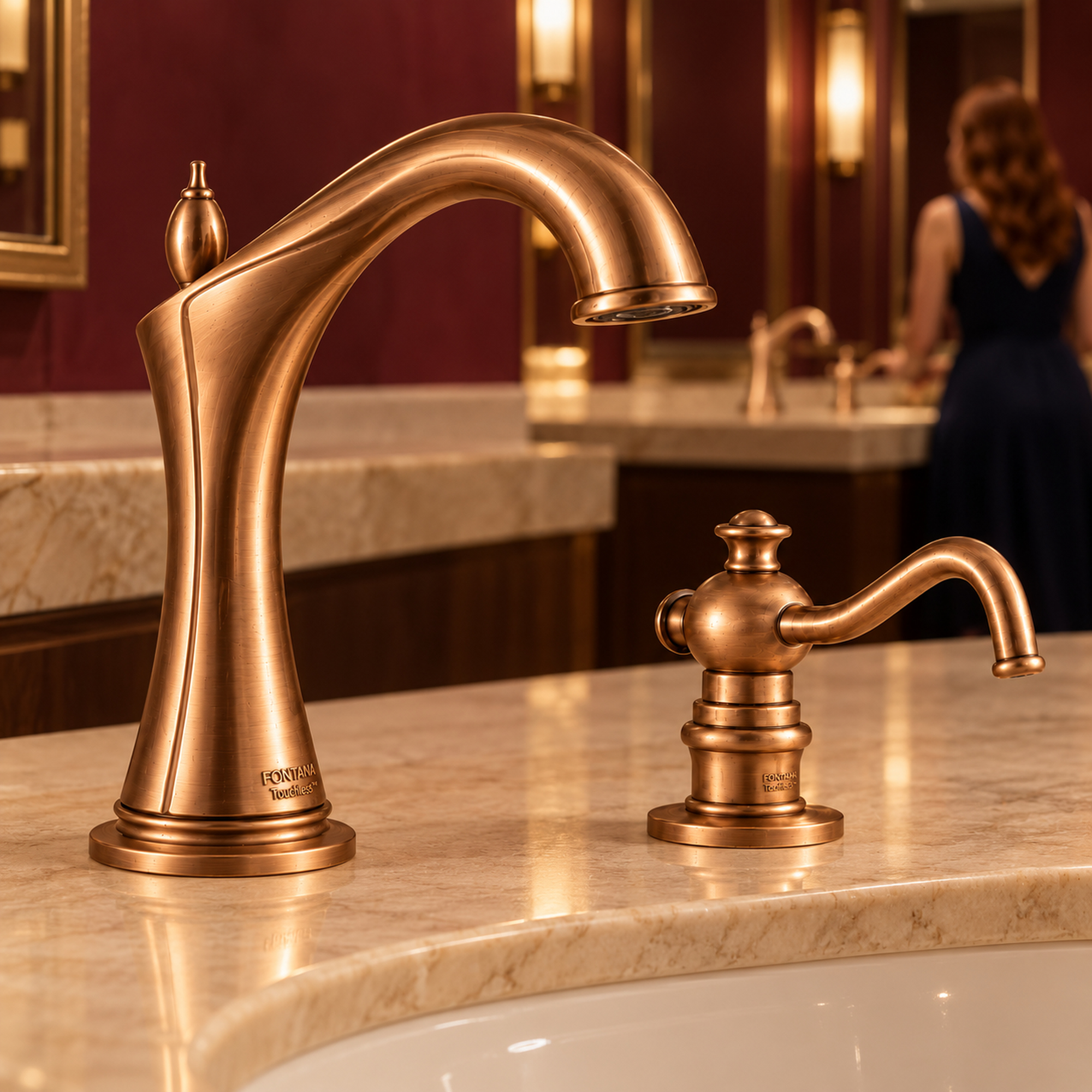
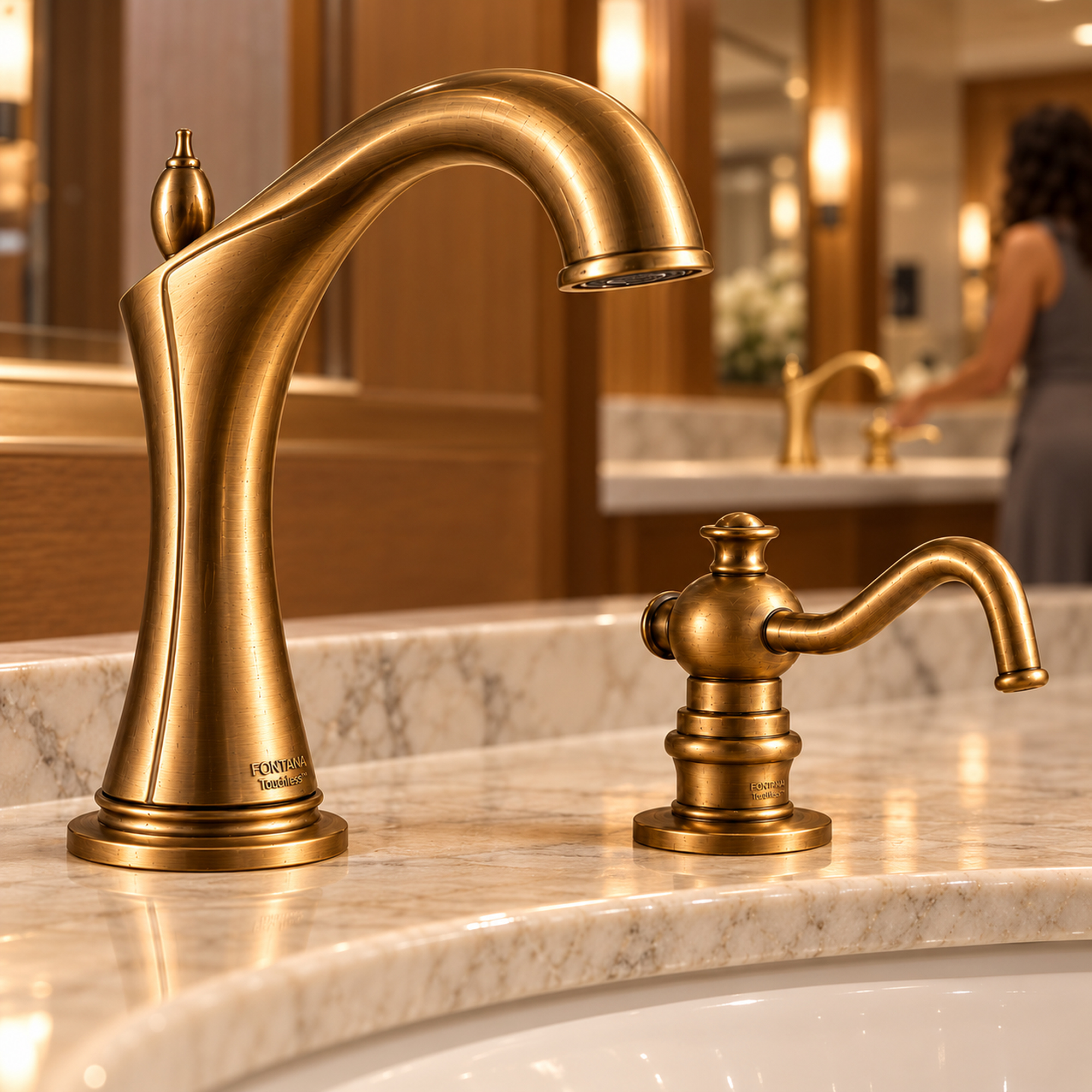
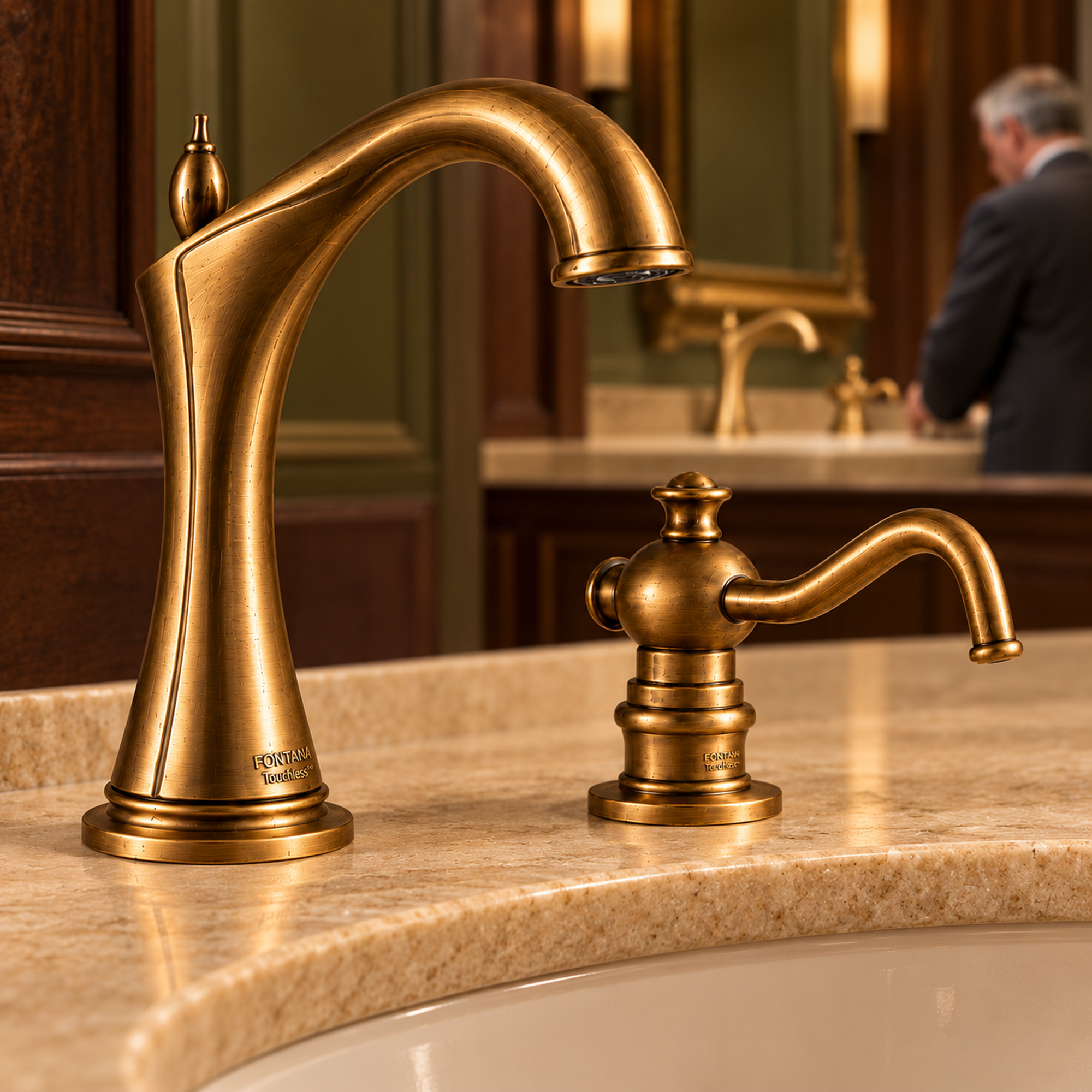
Restroom sustainability also depends on what happens between events. Coordinated faucet and soap-dispenser arrangements can improve washstation organization, simplify stock control, and give facility teams a consistent inspection sequence. Fontana’s commercial touchless portfolio includes separately installed faucet and soap configurations as well as integrated washstation concepts.
Centralized soap distribution may reduce individual refill activity in a multi-station bank, while standardized sensors and components can make preventive maintenance easier to schedule. However, a centralized system introduces its own routing, supply, sanitation, and single-point-of-failure questions. Design teams should compare architectures based on the operating model of the venue rather than assuming one arrangement always delivers the lowest lifecycle cost.
Read more: what to measure after opening day
Facility teams can track water-consumption trends, activations or estimated uses, soap refills per event, unscheduled repair tickets, nuisance sensor triggers, battery replacement events, and fixture downtime. Where metering is available, compare normalized consumption across similar events and account for attendance, catering activity, seasonal conditions, and cleaning operations. These datasets can support more credible ESG reporting and better decisions when future restroom banks are renovated.
Fontana Touchless Planning Across Sports and Entertainment Venues
Large-event facilities share an operational challenge: intense demand during a limited number of busy minutes. The following FontanaShowers reference pages illustrate the types of stadium, university, architectural, and cultural-venue applications to consider. Project-specific products, procurement status, and installed conditions should be confirmed directly with the responsible project team.

Las Vegas MLB Stadium
Review the restroom-selection context for a major stadium development where repeatable faucet operation, durability, and service planning are critical design priorities.
Explore the Las Vegas MLB Stadium reference →
UNL Memorial Stadium
Examine chrome touchless faucet planning for a high-traffic university sports venue, with attention to short event-day peaks and standardized sink stations.
Explore the Memorial Stadium reference →
Virginia Architectural Projects
Consider touchless fixtures in public-oriented performing-arts and architectural settings where visual compatibility and accessible maintenance must coexist.
Explore Virginia architectural faucet applications →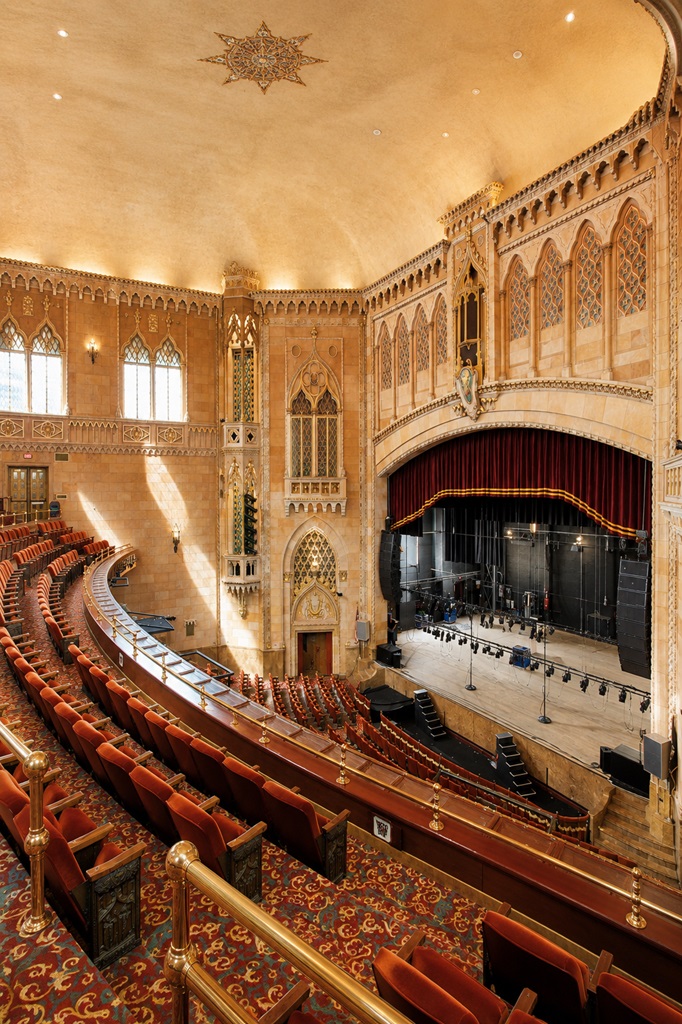
Hershey Theatre, Pennsylvania
Explore the integration of touchless restroom systems into a historic entertainment venue with event-driven traffic and maintenance considerations.
Explore the Hershey Theatre reference →Apply the lesson, not an assumed performance result
Project references can illustrate specification priorities, but they are not substitutes for certified flow data, as-built records, metered savings, or independent verification of a particular venue’s fixture installation.
Long-Term Sustainability Includes Repairability and Replacement
Material choices and maintenance logistics affect resource consumption after a stadium opens. Fixtures that are easy to clean, isolate, service, and repair may avoid premature replacement of complete units. Architects and procurement teams should review finish durability, repairable components, replacement-part availability, accessible mounting arrangements, and commissioning support when comparing touchless options.
Electronic faucets add sensors, controllers, power supplies, and solenoid valves that require a defined maintenance strategy. Their advantages should therefore be weighed against the expected replacement of batteries or modules, the energy demand of controls, and the cost of specialist servicing. A detailed lifecycle assessment requires model-level component information; one should not infer a lower embodied-carbon footprint from touchless operation alone.
Learn more: procurement language for durable commercial fixtures
Specify replaceable electronic and hydraulic components where available, complete maintenance instructions, service-access clearances, spare-parts identification, approved cleaning products, and a commissioning checklist. For large phased projects, require a clear process for evaluating substitutions against flow, power, sensing, accessibility, rough-in dimensions, finish, warranties, and required certifications.
During handover, the owner should receive the actual model schedule and revised record drawings—not simply a catalog reference. That documentation helps future facility teams preserve the water-conservation intent even when individual fixtures are repaired or replaced.
Frequently Asked Questions
Do touchless faucets automatically make a stadium restroom sustainable?
No. Automatic shutoff can help avoid unattended flow, but actual outcomes depend on flow rate, detection settings, installation, pressure, occupancy, maintenance, and user behavior. Savings should be modeled carefully and verified where possible through metering.
Is 0.5 GPM enough to earn LEED water-reduction credit?
Not on its own. LEED v4.1 uses 0.5 GPM at 60 psi as the public-lavatory baseline. Credit performance is based on a project-level calculation under the relevant rating system; the design must be evaluated against all applicable fixture assumptions and requirements.
Can a public-restroom faucet be described as WaterSense certified?
Only where the applicable program and specific model documentation support that statement. The familiar WaterSense bathroom sink faucet label addresses private-use lavatory faucets and accessories; an efficient public-use faucet should not automatically inherit that label.
Which documents should owners request before approving a Fontana system?
Request model-specific flow and pressure data, dimensional drawings, power details, controls documentation, installation and maintenance guides, applicable certification records, service-part information, and a plan for on-site commissioning.
Build a More Measurable Stadium Restroom Strategy
For new arenas, athletic facilities, and existing stadium renovations, start with a clear water budget, a coordinated fixture schedule, model-specific technical evidence, and a maintainable operations plan. Fontana’s commercial touchless collection gives project teams a starting point for evaluating faucet, soap, and washstation configurations against those requirements.
Explore Commercial Touchless Fixtures → Explore MultiFeed Soap Systems →