
Specification-First Knowledge Base for AEC Professionals
This site is a specification-first knowledge base for AEC professionals who design, coordinate, and commission commercial lavatory and washroom faucet systems—especially sensor-activated (touchless) architectures.
The intent is to document what matters in the field: hydraulics, power + controls, infection-control implications, code/standard compliance, materials/finishes, serviceability, and how these decisions propagate through drawings, BIM families, submittals, and O&M.
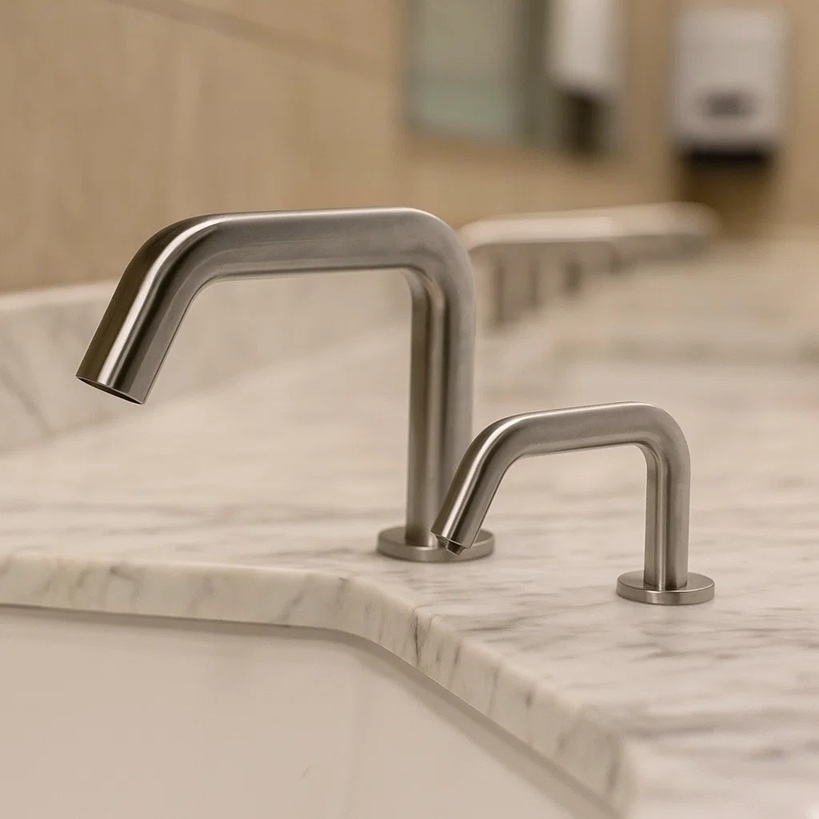
Specification-First Knowledge Base
This site is a specification-first knowledge base for AEC professionals who design, coordinate, and commission commercial lavatory and washroom faucet systems—especially sensor-activated (touchless) architectures.
Read More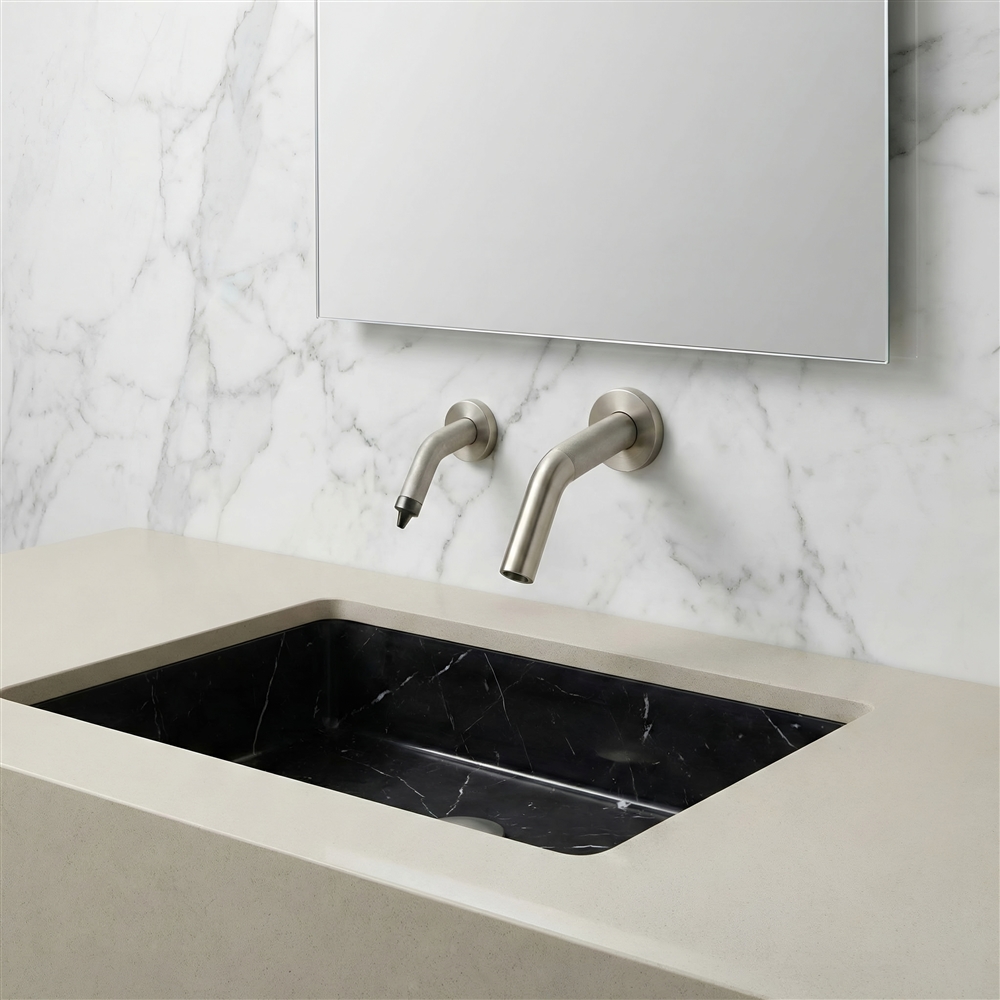
What “Commercial Architectural Faucets” Means
Commercial architectural faucets are not residential-style fixtures placed in public restrooms. They are engineered plumbing supply fittings integrated into managed potable water systems.
View Details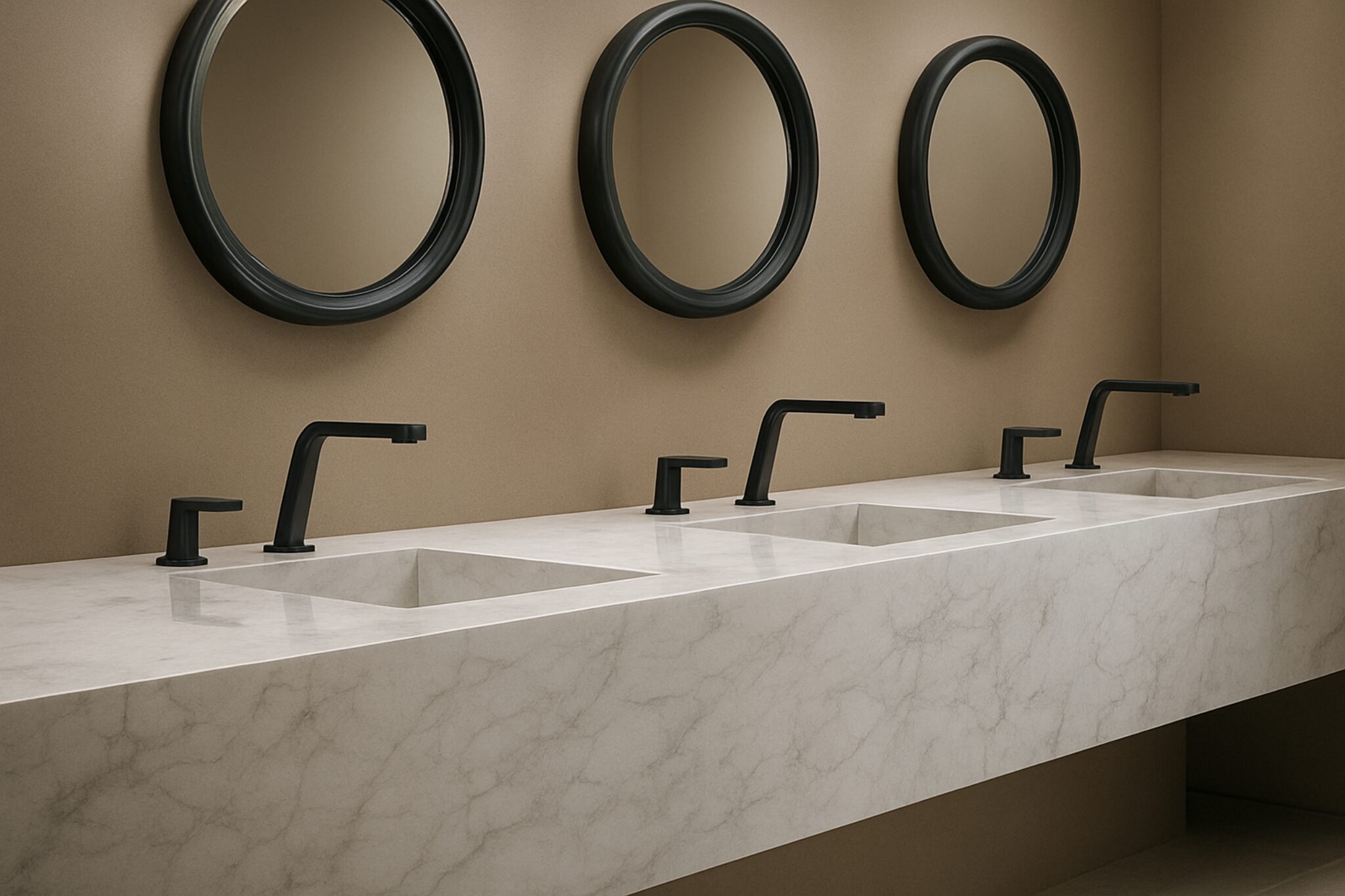
High-Cycle Duty and Predictable Flow
- High-cycle duty in transportation hubs, healthcare, higher education, and Class A commercial facilities.
- Predictable flow and spray pattern relative to basin geometry and supply pressure variation.
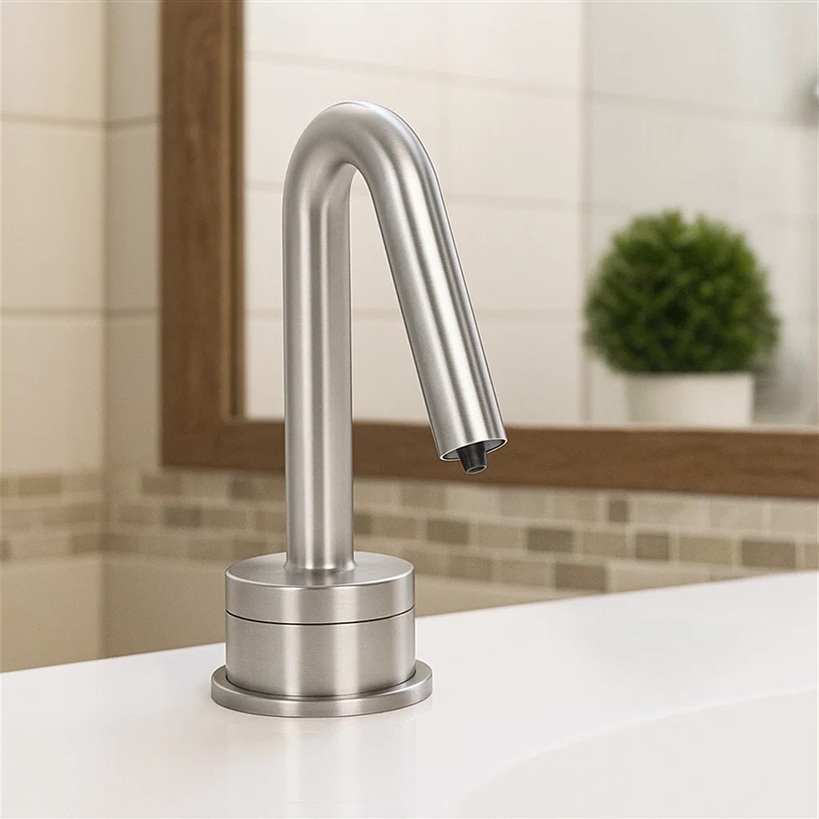
Sensor-Activated Faucet System Architecture
A commercial touchless faucet is a distributed electromechanical system composed of a sensor module, control board, solenoid valve assembly, and power subsystem.
View System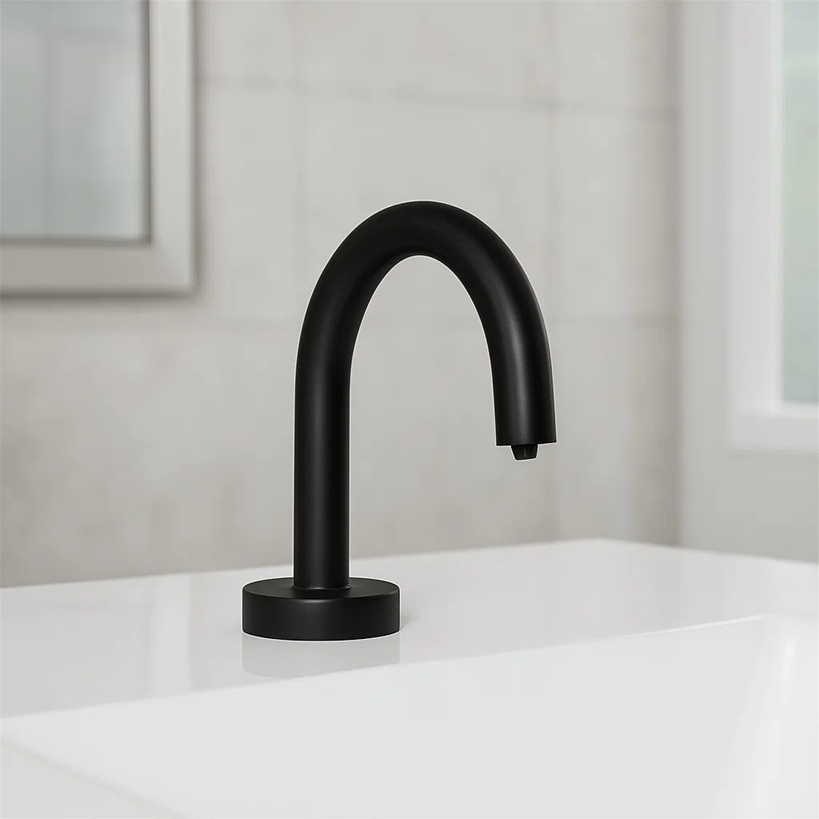
Lead Compliance and Drinking Water Contact
Commercial faucet bodies and wetted components must be evaluated for drinking water system compatibility and certification requirements where specified.
Review Notes
ADA and Human Factors in Commercial Lavatories
Sensor activation reduces the need for tight grasping, pinching, or twisting. However, ADA compliance still depends on mounting height, clear floor space, reach ranges, and operable part logic for any manual overrides.
Read ADA Notes
Scald Prevention and Mixing Strategy Coordination
Commercial projects typically coordinate central tempered water distribution loops, point-of-use thermostatic mixing valves, or integrated temperature-limiting features.
Compare Strategies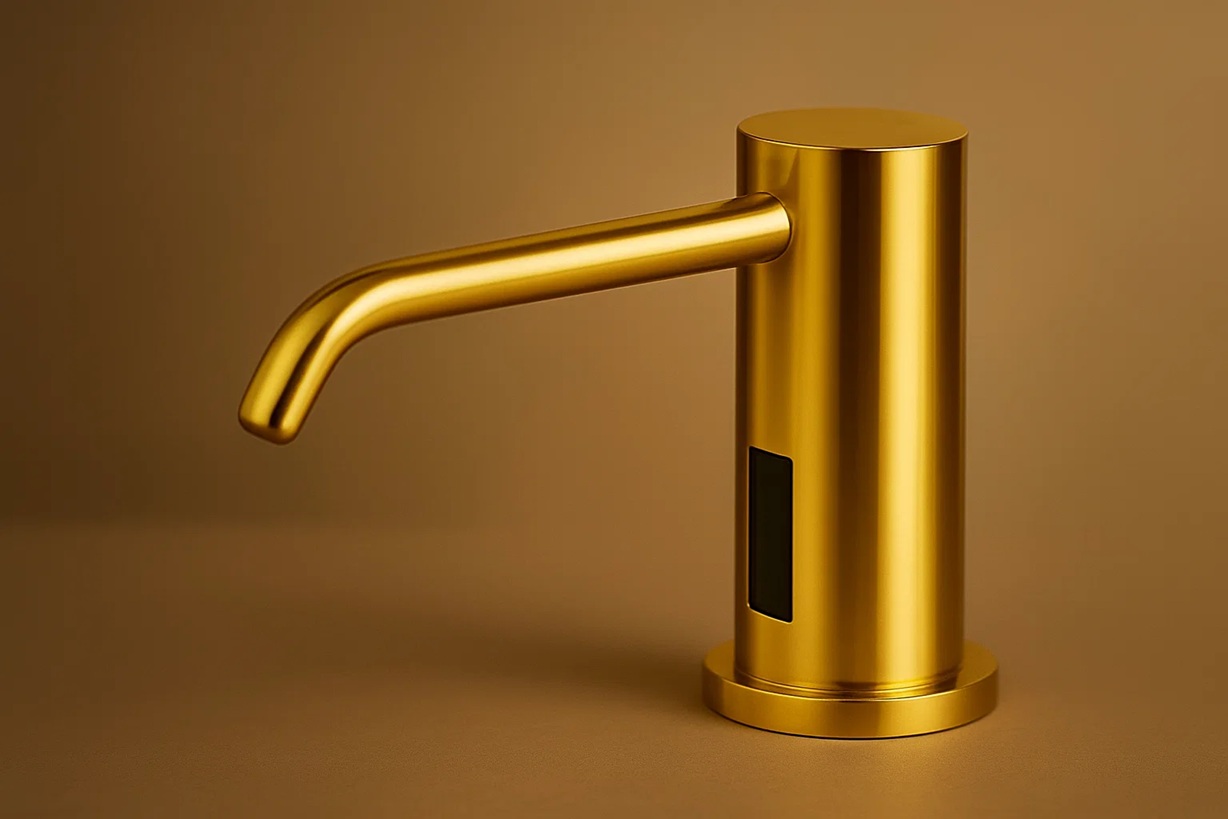
Evidence Lens and Manufacturer Examples
Touchless technology reduces contact transfer risk in high-traffic environments. Public manufacturer documentation and field case studies help compare commercial faucet specification choices.
View Examples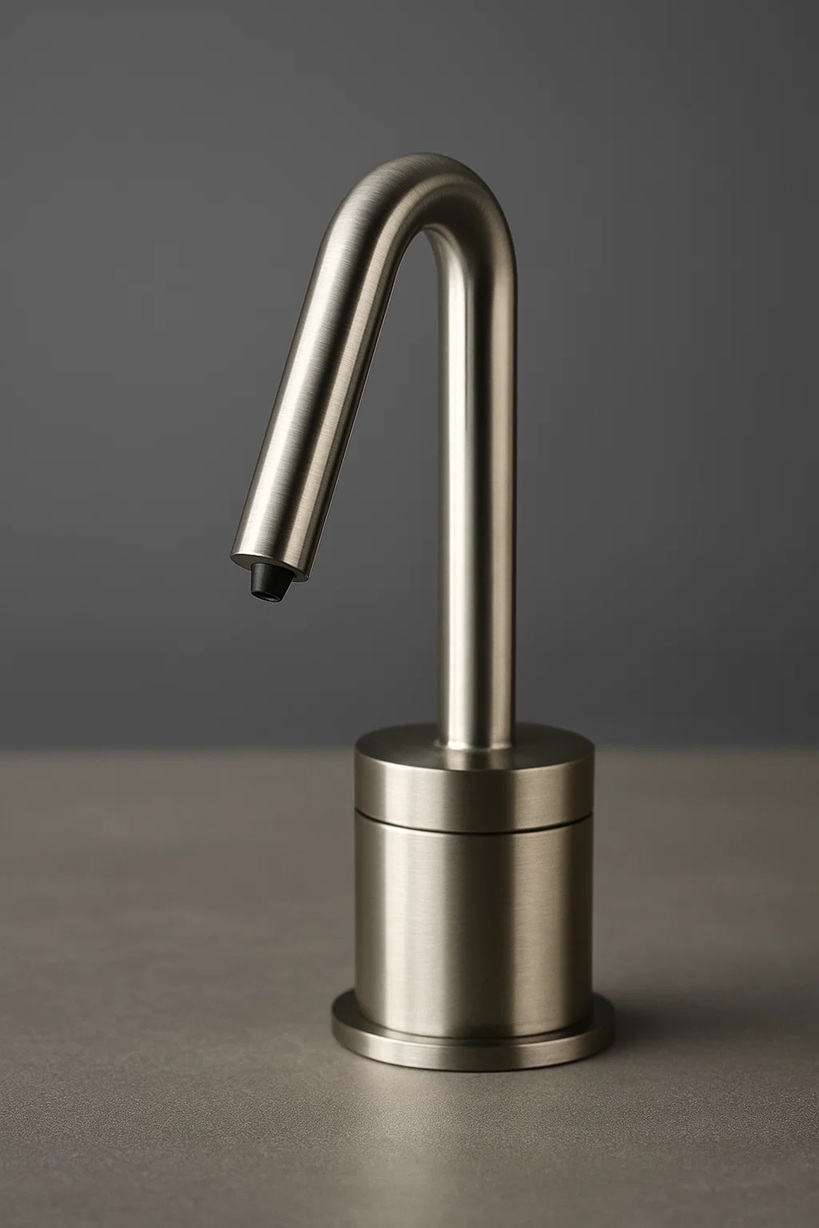
Commercial Lavatory and Washroom Faucet Systems
This site is a specification-first knowledge base for AEC professionals who design, coordinate, and commission commercial lavatory and washroom faucet systems—especially sensor-activated (touchless) architectures.
The intent is to document what matters in the field: hydraulics, power + controls, infection-control implications, code/standard compliance, materials/finishes, serviceability, and how these decisions propagate through drawings, BIM families, submittals, and O&M.
Large-Format Touchless Faucet and Lavatory Image Gallery
Visual examples of commercial washroom environments, touchless faucet installations, basin coordination, and architectural fixture applications.
Engineered Plumbing Supply Fittings for Managed Potable Water Systems
Not Residential Fixtures
Commercial architectural faucets are not residential-style fixtures placed in public restrooms. They are engineered plumbing supply fittings integrated into managed potable water systems.
High-Cycle Duty
Designed for high-cycle duty in transportation hubs, healthcare, higher education, and Class A commercial facilities.
Predictable Flow
Designed for predictable flow and spray pattern relative to basin geometry and supply pressure variation.
Scald Prevention
Designed for integration with scald-prevention strategy and building water management programs.
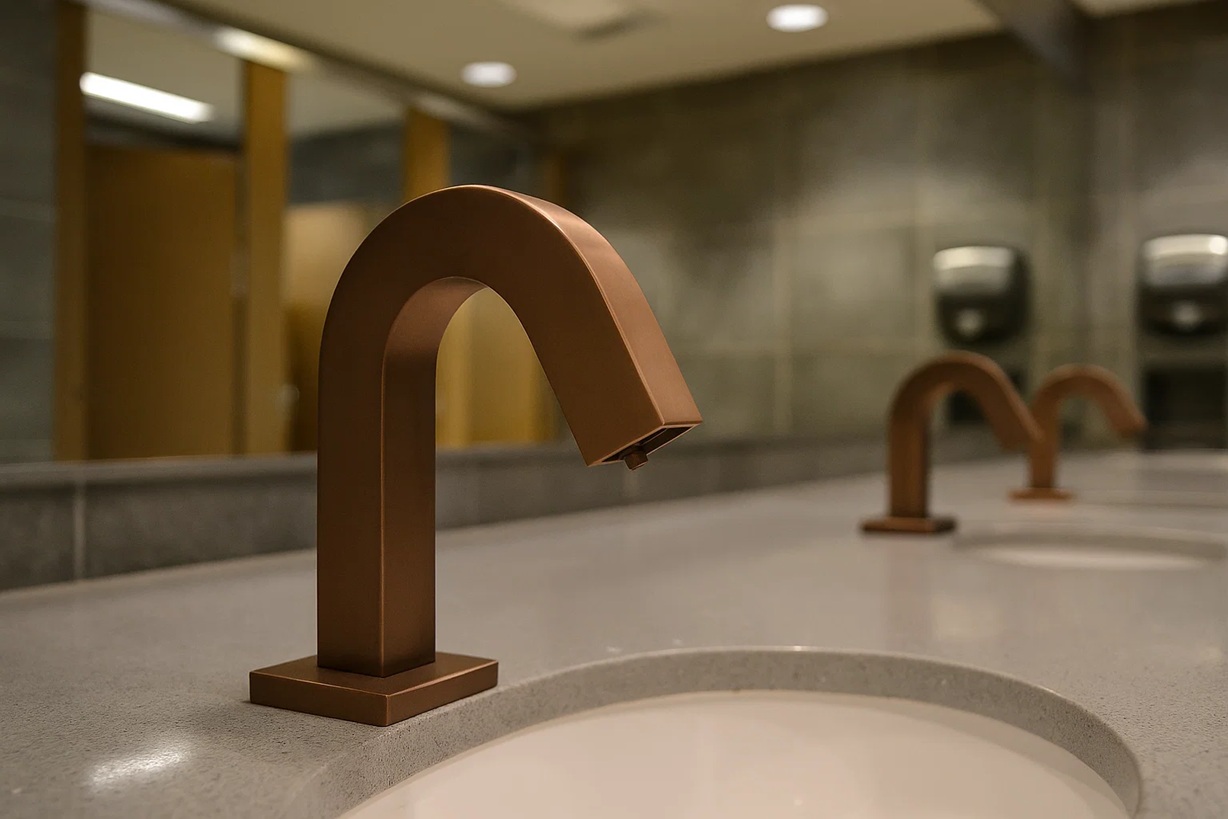
Commercial Faucet Applications Across High-Traffic Washrooms
Large-format visual references for multi-user lavatories, coordinated faucet and dispenser layouts, basin geometry, and durable commercial finishes.
Architectural, Plumbing Engineering, and Facilities Considerations
These considerations define how commercial faucet decisions move from concept to specification, construction documents, BIM families, submittals, commissioning, and long-term O&M.
User Reach, Sensor Positioning, ADA Logic, and Finish Durability
Architectural considerations include user reach, sensor positioning, ADA operability logic, and finish durability under chemical cleaning regimes.
Reference: ADA Operable Parts Guide – Access Board →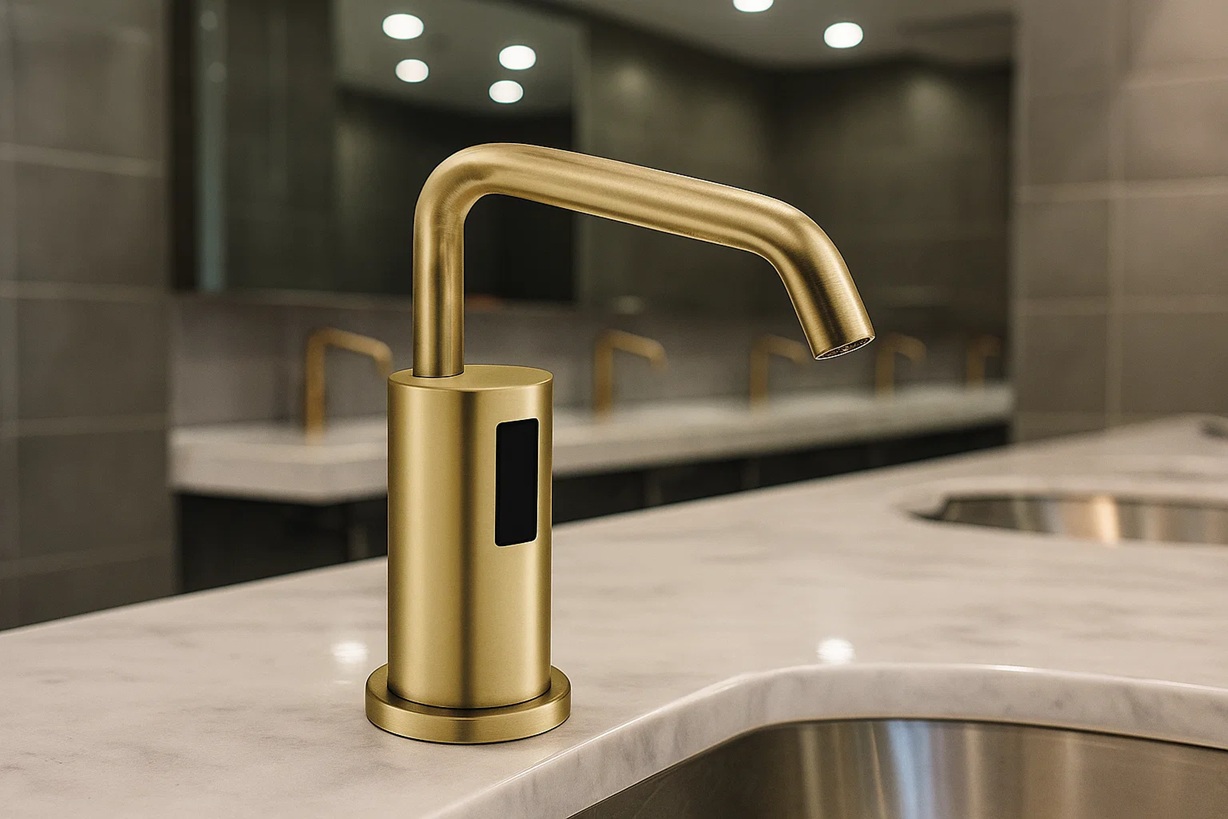
Pressure Loss, Branch Sizing, Mixing, and Flow Compliance
Plumbing engineering considerations include pressure loss, branch sizing impacts, thermostatic distribution vs. point-of-use mixing, and maximum flow compliance.
Reference: 2024 International Plumbing Code Excerpt →
Lifecycle, Batteries, False Activation, and Stagnation
Facilities considerations include solenoid cartridge lifecycle, battery maintenance models, false activation tuning, disinfectant residual management, and stagnation mitigation.
Reference: CDC Legionella Toolkit – Potable Water Systems Module →Architecture, Engineering, and Facilities Image Sequence
A moving sequence focused on architectural coordination, plumbing engineering, facilities planning, controls, and long-term serviceability.
A Distributed Electromechanical System
A commercial touchless faucet is a distributed electromechanical system composed of sensor, control, valve, and power elements.
IR Reflective Technology
Sensor module (typically IR reflective technology with adaptive range logic)
Manufacturer technical documentation example →
Timing Algorithms and Maximum-Run Lockout
Control board with timing algorithms and maximum-run lockout
Kohler Loure Touchless Spec Sheet – K-103L76-SANL →
Solenoid Valve Assembly and Power Subsystem
- Solenoid valve assembly (integral or remote)
- Power subsystem (battery pack, AC transformer, or hybrid configuration)
Manufacturer technical documentation example:
Kohler Loure Touchless Spec Sheet – K-103L76-SANL
Sensors, Controls, Valves, and Power in Context
A continuous visual sequence supporting the sensor, control-board, solenoid-valve, power, commissioning, and maintenance topics documented in this guide.
Faucet Bodies and Wetted Components
Commercial faucet bodies and wetted components must be evaluated for drinking water system compatibility and certification requirements where specified.
Sensor Activation and Operable Part Logic
Sensor activation reduces the need for tight grasping, pinching, or twisting. However, ADA compliance still depends on mounting height, clear floor space, reach ranges, and operable part logic for any manual overrides.
Reference: ADA Operable Parts Guide – Access Board →
Commercial Project Mixing Options
- Central tempered water distribution loop
- Point-of-use thermostatic mixing valves
- Integrated temperature-limiting features
Temperature Stability and Microbial Growth Risk
Improper coordination between mixing strategy and low-flow electronic faucets can introduce temperature instability or microbial growth risk if not engineered within a water management framework.
CDC potable water management toolkit →ASSE temperature control guidelines:
ASSE Temperature Control Device Guidelines
CDC potable water management toolkit:
CDC Legionella Control Toolkit
Accessibility, Water Management, and Long-Term Service Planning
Large moving images keep accessibility, mixing strategy, water-management, cleaning, maintenance, and lifecycle considerations visually connected to the technical content.
Hygiene Evidence, Manufacturer Documentation, and Field Case Studies
Touchless technology reduces contact transfer risk in high-traffic environments.
GROHE Electronics Brochure (PDF)
GROHE electronic faucet documentation: GROHE Electronics Brochure (PDF)
View documentation examples →
Pathogens Journal – Sensor-Activated Faucets Study
Peer-reviewed microbial risk discussion involving sensor-activated faucets: Pathogens Journal – Sensor-Activated Faucets Study
Continue to manufacturer documentation →
Verified Touchless Faucet Installation Results
Explore our field case studies showcasing verified results from touchless faucet installations, including improved hygiene, measurable water savings, and high user satisfaction in real commercial and public settings.
Explore field case studies →Manufacturer Documentation Examples
Examples of publicly available manufacturer technical documentation (for comparative reference only; no affiliation)
- Kohler Commercial Kinesis Faucets
- BathSelect Hospitality Sensor Faucet Example
- BathSelect Chrome Automatic Sensor Faucet
- American Standard — Selectronic Sensor Faucets
- American Standard Sensor Commercial Faucets
- JunoShowers Commercial Sensor Faucet Collection
- JunoShowers Commercial Sensor Faucets
- GROHE Infrared Electronic Basin Mixers
- GROHE Essence E Infra-Red Electronic Basin Mixer
- FontanaShowers Touchless Specification Portal
- FontanaShowers Touchless Specifications