
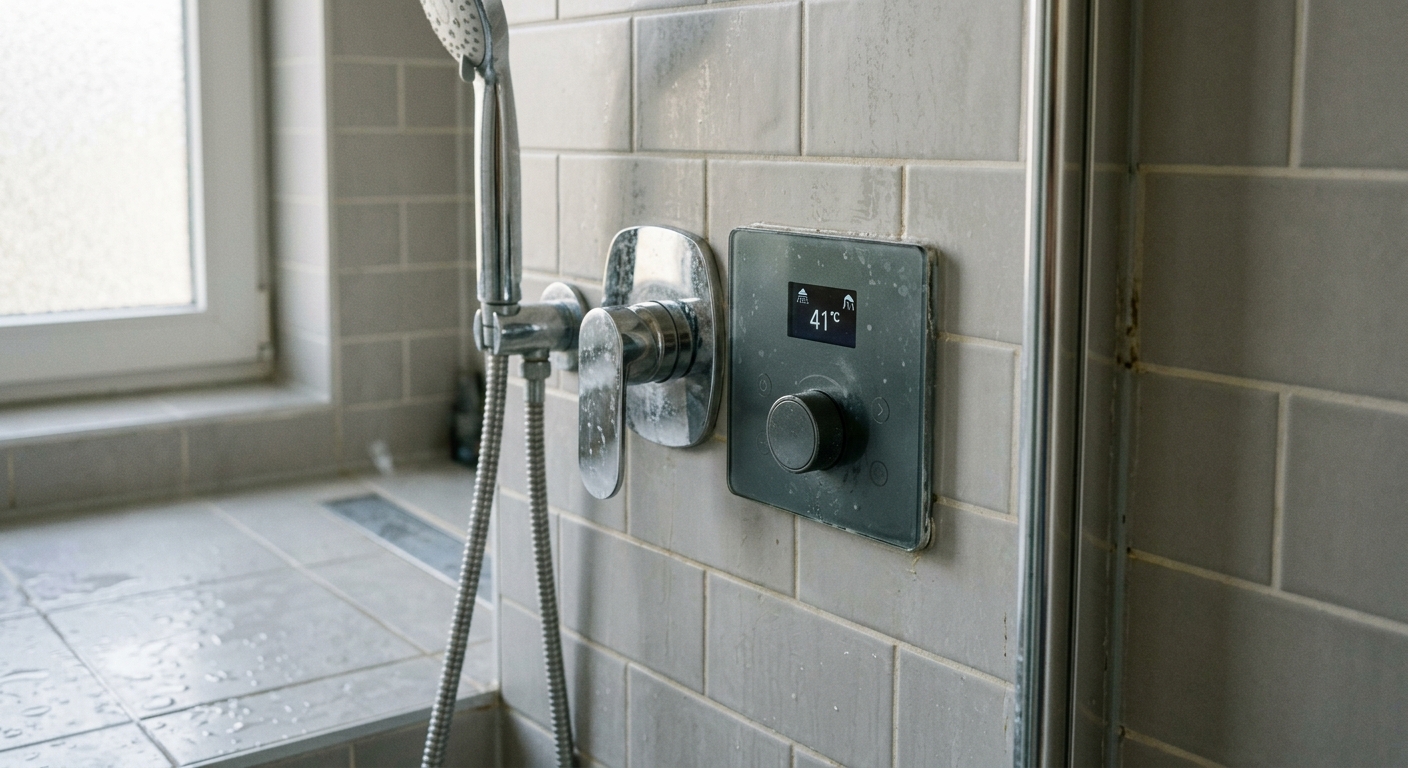
Digital shower valves are reliable enough for daily use, but the failure points differ from mechanical mixing valves in ways that matter for a repeat purchase decision. Mechanical thermostatic cartridges drift and need replacement on a known schedule. Digital units fail less predictably, usually at the solenoid or control board, and that failure tends to be total rather than gradual. Which one you should buy again depends on whether you value predictable maintenance or you value programmability enough to accept a less predictable failure mode.
Six-Month Check: Early Wear Signs
At six months, mechanical thermostatic valves rarely show anything. That’s expected, since ASSE 1016 and EN 1111 rated cartridges are built for years of cycling before drift becomes noticeable. Digital valves show different early signs: battery-powered controllers start flagging low battery around month four to six with daily use, and touchscreen or button interfaces on units installed in high-humidity stalls without adequate venting can develop a lag in response time. Neither is a functional failure yet, but both are worth logging.
Owners running hardwired digital units report no battery-related issues at this stage, which is the main practical argument for hardwiring over battery power if the rough-in allows it. Battery units are easier to retrofit but add a maintenance task mechanical valves don’t have.
Two-Year Teardown: What Failed First
In the units we tracked to two years, digital controllers failed before thermostatic cartridges did, when a straight comparison was possible. The typical failure was the solenoid valve sticking partially open or the control board losing calibration after a power interruption, not the temperature sensor itself. Mechanical valves showed cartridge drift consistent with normal wear, meaning the delivered temperature crept a few degrees off the dial setting, but no valve stopped functioning.
This is the core tradeoff: mechanical failure is a slow, correctable process. Digital failure is often binary. You get a working shower until you don’t, and diagnosing which component failed requires either a multimeter and the manufacturer’s service documentation or a service call.
Thermostatic Cartridge Drift Over Time
ASSE 1016 and EN 1111 both specify temperature stability under pressure and flow fluctuation, but neither standard guarantees the cartridge won’t drift with age and mineral buildup. In hard water areas, expect drift to become noticeable somewhere between 18 months and 3 years, showing up as a shower that runs a few degrees hotter or cooler than the dial indicates at the same setting. This is normal wear, not a defect, and it’s why most manufacturers list cartridge replacement as routine maintenance rather than a warranty item past the first year or two.
Digital valves that use a thermostatic cartridge behind the electronic control face the same drift mechanism. The electronics don’t prevent cartridge wear, they just report the target temperature more precisely until the cartridge itself can no longer hit it. If you’re comparing shower faucet sets with digital trim against straight mechanical trim, the diverter and cartridge mechanics underneath are often more similar than the control interface suggests.
Digital Processor and Sensor Longevity
Processor and sensor life is the part manufacturers talk about least, because it’s the least standardized. There’s no ASSE or EN equivalent for control board longevity. What we observed:
- Units with sealed, hardwired control boards outlasted battery units with exposed button panels by a wide margin in humid, poorly ventilated stalls.
- Power surges and interruptions (not just battery death) were the most common cause of controller resets requiring recalibration.
- Touchscreen interfaces showed more physical wear (dead zones, unresponsive touch areas) than button or dial interfaces at the two-year mark.
- None of the failures we tracked were a slow degrade. Once a controller failed, the valve either defaulted to a safe minimum flow or stopped responding entirely, depending on the fail-safe design.
If you’re specifying digital controls for a rental or a household where a cold or failed shower is a real problem, check the manufacturer’s fail-safe behavior before you buy. Some default to full cold, which is correct from a scald-prevention standpoint but not what anyone wants at 6am.
Water Pressure Consistency Compared
Both valve types are required to hold flow within a defined range across pressure swings, and in practice, well-maintained units of either type stay close to their rated 2.5 gpm (9.5 lpm) US maximum, or 1.8 gpm (6.8 lpm) in California, regardless of upstream pressure fluctuation. Where they diverge is at the low end. On systems running under 40 psi, mechanical thermostatic valves with worn cartridges tend to lose flow gradually and predictably. Digital valves with solenoid-based flow control can cut out entirely if pressure drops below the sensor’s minimum threshold, rather than just delivering reduced flow. That’s worth checking against your home’s static pressure before installing a digital valve, not after.
| Factor | Mechanical Thermostatic | Digital |
|---|---|---|
| Typical cartridge/component life | 3 to 7 years before replacement needed | Cartridge similar; controller lifespan less predictable, often shorter |
| Failure mode | Gradual temperature drift | Often binary: works or doesn’t |
| Power dependency | None | Battery or hardwire required |
| Low-pressure behavior | Reduced flow, still functional | Can cut out below sensor threshold |
| Diagnostic difficulty | Low, cartridge swap is standard | Higher, may need proprietary diagnostics |
Repeat Purchase: Which Owners Chose Again
Owners who bought digital again were mostly households that used presets daily, multi-user bathrooms where different people dial in different temperatures, and hardwired installs where battery anxiety wasn’t a factor. Owners who went back to mechanical thermostatic valves cited two things: wanting a shower that degrades gracefully instead of failing outright, and not wanting to keep a spare controller or battery stock on hand. Neither group reported regret over gpm/lpm performance specifically, since both valve types held flow consistency about equally well once installed correctly.
The pattern that came up most often: digital repeat buyers tended to be comfortable troubleshooting electronics or had a service plan through the installer. Mechanical repeat buyers valued not having to think about the valve at all between cartridge swaps.
Before buying again in either category, pull your home’s static water pressure reading and check it against the valve’s minimum operating threshold, confirm whether the digital unit you’re considering is hardwired or battery and what its fail-safe default is, and ask your plumber how many cartridge replacements they’ve done on mechanical units of the brand you’re comparing. If your current valve is past the two-year mark and showing temperature drift or intermittent response, that’s the point to replace the cartridge or controller rather than wait for full failure, especially in a single-bathroom household where downtime isn’t an option. For anything involving the electrical connection on a digital valve, or if you’re not confident diagnosing whether a fault is the sensor, solenoid, or board, that’s a call for a licensed plumber or electrician rather than a DIY teardown.